
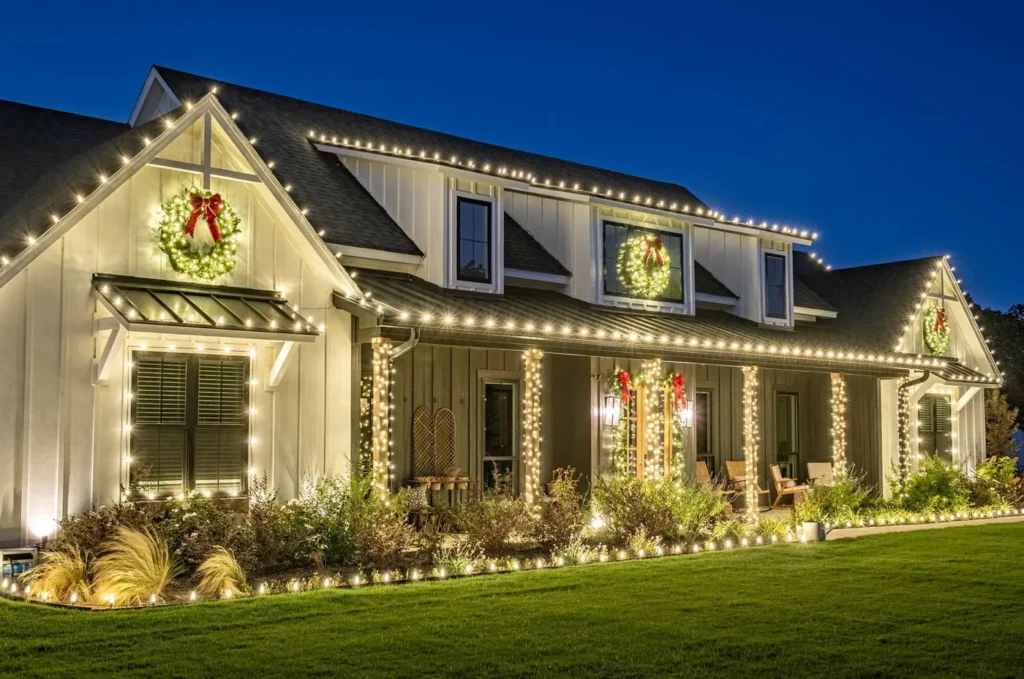
Every December, thousands of Central Pennsylvania homes light up for the season. Some are simple and tasteful, with a glowing roofline and a wreath on the door, and others are full displays with trees, shrubs, pathways and animated features. If you want your home to shine this year, you face a classic question: should you hang the lights yourself or hire a professional?
The honest answer depends on your home, your time, your comfort with ladders and your budget. This guide compares DIY and professional Christmas light installation, with costs, safety considerations, design tips and a checklist to help you decide. It comes from Haven Builders, a locally owned construction and remodeling company serving Williamsport, Lock Haven and State College, where we also offer holiday lighting. For our local service page, see Christmas light installation in Williamsport.
The Real Question: Time, Safety and Look
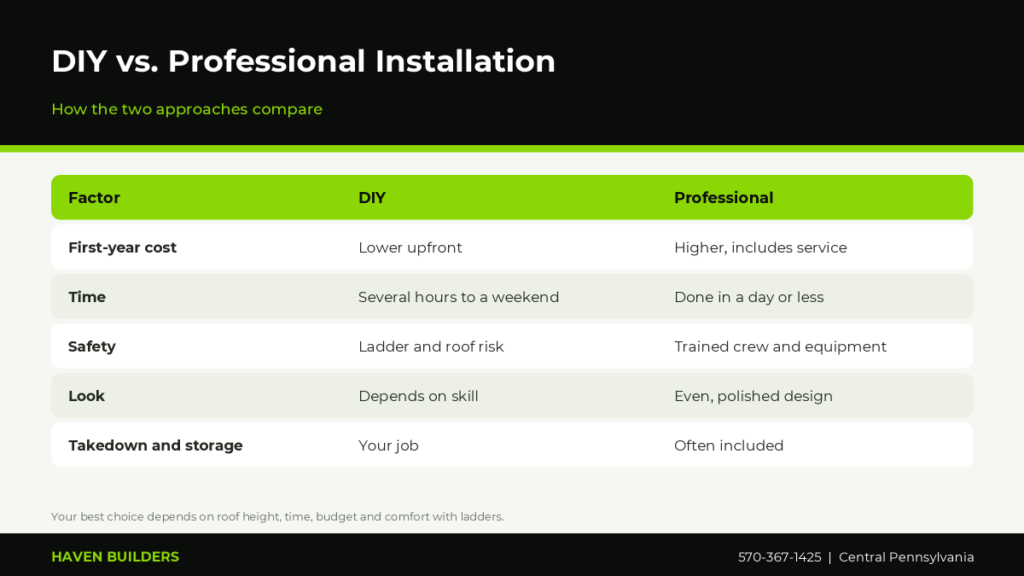
Most homeowners think first about cost, but time and safety matter just as much. Hanging lights means working at height, often in cold weather, sometimes on ice or wet surfaces. It also takes much longer than expected, especially if you have a two-story roofline, dormers or large trees. The final look depends on spacing, symmetry and clean lines. A professional design can make a house look like a catalog photo, while a rushed DIY job can look uneven or sag.
That said, plenty of homeowners enjoy decorating their own homes and do a great job. If you have a single-story house, a simple design and a free weekend, DIY can be a fun and budget-friendly family project.
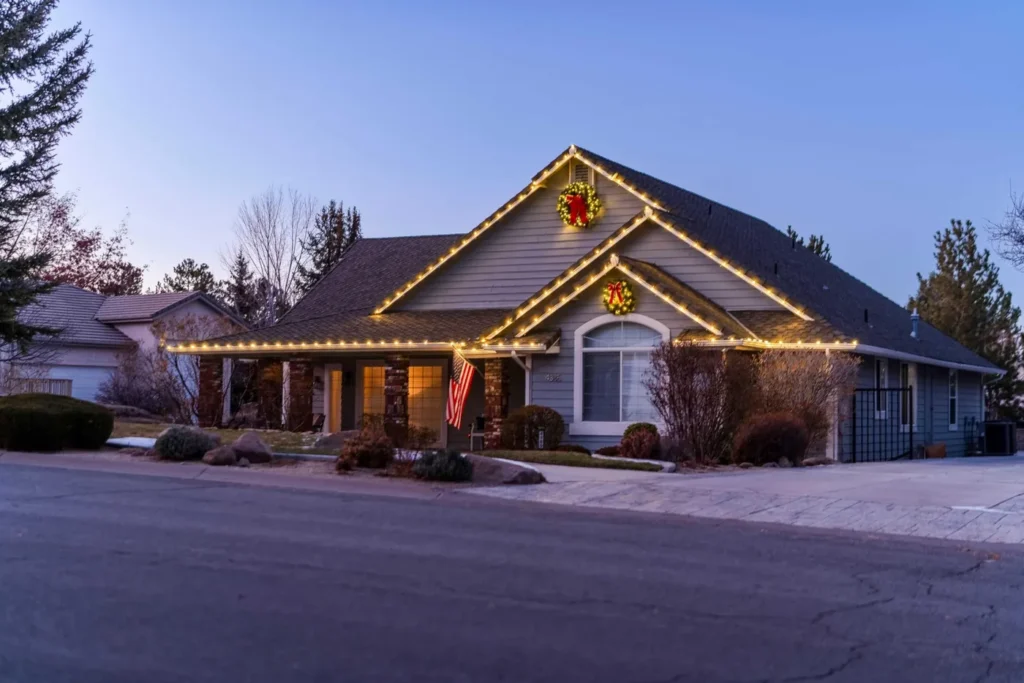
DIY Christmas Lights: What to Expect
Pros of DIY
- Lower upfront cost. You pay only for lights, clips, cords and timers.
- Full creative control. You choose every color, spacing and feature.
- Reusable investment. Good lights can last many seasons if stored properly.
- Family tradition. Many people enjoy the process.
Cons of DIY
- Safety risk. Falls from ladders and roofs are a leading cause of holiday injuries.
- Time and effort. Installation, troubleshooting and takedown can take many hours.
- Quality of materials. Store-bought strings often fail faster than commercial-grade lights.
- Storage and replacement. You must untangle, store and replace failed strands each year.
Professional Installation: What You Get
A professional holiday lighting service usually handles design, commercial-grade lights, installation, maintenance during the season, takedown and storage. The crew has the training and equipment to work at height safely, and they know how to hide cords, balance spacing and avoid damage to gutters and shingles. If a bulb fails, a good company returns to fix it.
Pros of Professional Service
- A cleaner, more even appearance.
- No ladders, no cold hands and no weekend lost.
- Commercial-grade LEDs that last longer and use less power.
- Maintenance, takedown and storage often included.
Cons of Professional Service
- Higher cost, particularly in the first year.
- You depend on the company’s schedule, and December bookings fill early.
- Less hands-on creative control, though good companies customize.
Planning Your Display: Measure Before You Buy
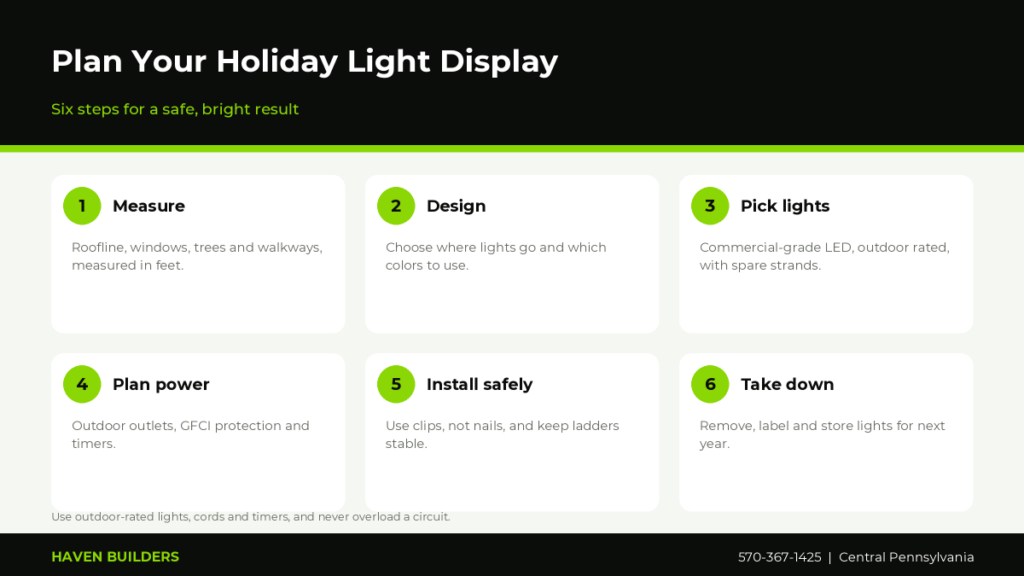
The most common DIY mistake is buying lights before measuring. Walk around your house and measure the roofline, eaves, window frames, door frames and railings in feet. Write the numbers down, then add ten to fifteen percent for corners, slack and mistakes. For trees, measure the height and trunk circumference, and remember that a tree wrapped with lights from trunk to top can use far more strands than you expect. A quick sketch or photo with notes helps you plan where outlets are, where cords will run and how many circuits you need.
Also check the power available outdoors. Many older homes have only one or two exterior outlets, and they may share a circuit with other rooms. A typical LED strand uses very little power, but a large display with many strands, inflatables and extension cords can overload a circuit. Use a timer or smart plug to control the display, and follow the manufacturer’s limit for how many strands can be connected end to end.
How Much Does Christmas Light Installation Cost?
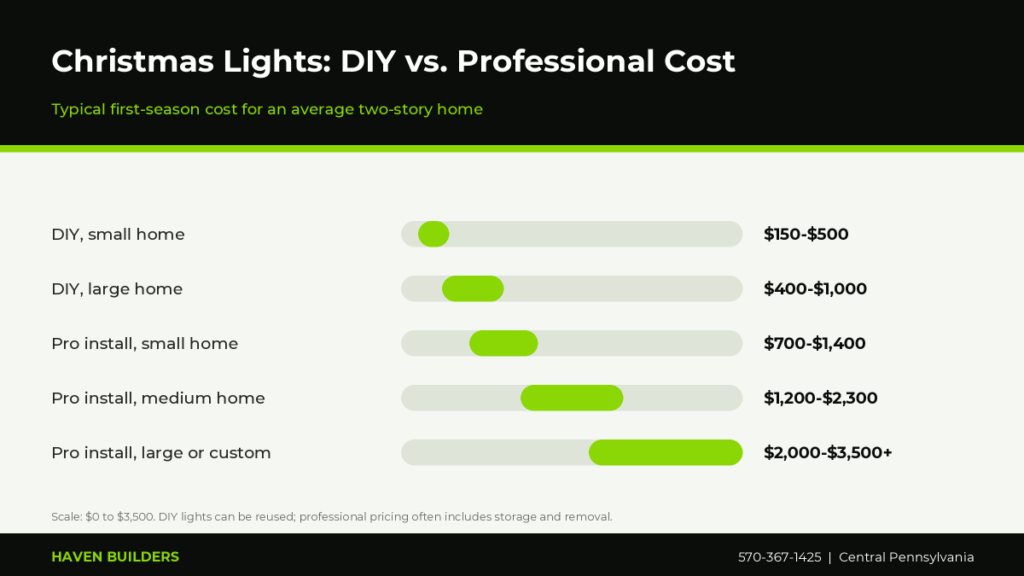
Professional installation cost depends on the size of your home, the length of the roofline, the number of trees and extras like wreaths, garlands, pathway lights and timers. The ranges above are planning numbers, not quotes. Many companies price by linear foot or by design package, and some offer yearly programs where the lights are owned by the company, so you do not buy or store them. DIY costs depend on the number of strings, clips, extension cords and timers you need. Over several seasons, DIY can be less expensive if you store and reuse the lights, while professional service may be a better value once you account for your time, risk and replacement.
What Affects the Price
- Roof height, pitch and number of stories.
- Roofline length and complexity.
- Trees, shrubs and landscaping features.
- Choice of white, warm white, multicolor or programmable lights.
- Whether the lights are purchased or leased.
- Removal and storage.
Safety First: Ladders, Roofs and Electricity
Safety is the main reason many homeowners choose professionals. If you do it yourself, follow these steps.
- Use a sturdy ladder rated for your weight, on level ground, with a helper to hold it.
- Never climb on a wet, icy or snowy surface.
- Keep a safe distance from power lines.
- Use outdoor-rated lights, extension cords and timers.
- Plug into GFCI-protected outdoor outlets. Our electrical guide explains why GFCI protection matters.
- Do not overload circuits or connect more strands than the manufacturer allows.
- Use clips made for gutters and shingles, not nails or staples.
- Turn off lights and unplug them before adjusting wiring.
Common DIY Mistakes and How to Avoid Them
Experienced installers see the same problems every year. Lights are hung unevenly because the spacing is eyeballed. Strands are plugged in for the first time after they are hung, which means a dead section has to be found on the roof. Indoor-rated lights or extension cords are used outdoors, where moisture can cause shorts. Cords are left lying in puddles or across walkways. Clips are skipped in favor of staples, which can puncture wire insulation.
You can avoid most of these problems with simple habits. Test every strand on the ground before hanging. Use a tape measure or a marked pole to keep spacing consistent. Choose outdoor-rated products, drip loops at connections and weatherproof covers for plugs. Hang from the highest point toward the outlet so that you are not working with live cords above you. Take photos of your finished layout so that next year you can repeat the design in a fraction of the time.
LED vs. Incandescent Lights
LED lights dominate the market today. They use far less electricity, run cool, last much longer and come in a wide range of colors and shapes. Incandescent lights give a classic warm glow but use more energy and burn out faster. For most homes, commercial-grade LED lights are the best long-term choice. Warm white LEDs give a traditional feel, while cool white or multicolor options give a modern or festive look.
Design Tips for a Beautiful Display
- Start with the roofline. Clean, straight lines create the foundation of the display.
- Frame architectural features. Dormers, windows, columns and doors add depth.
- Wrap trees with intention. Wrap trunks and larger branches evenly, and space strands consistently.
- Light pathways. Stake lights along walks and driveways for safety and welcome.
- Limit your palette. Two or three colors usually look more elegant than many.
- Use timers. Automated schedules save energy and effort.
Watch this video for ideas and tips on installing holiday lights safely and neatly.
Video: How to EASILY Install Christmas Lights Like A Pro (Spencer Claeys on YouTube)
Questions to Ask a Holiday Lighting Company
If you decide to hire a professional, ask a few questions before you sign. Are the lights commercial-grade LED, and do you own or lease them? What is included: design, installation, mid-season repairs, takedown and storage? Is the company insured, and does it carry workers’ compensation? Can you see photos of past displays on homes like yours? What is the timeline for installation, and what happens if there is a storm or a power outage?
A reputable company gives a written proposal that spells out the footage, features, price and schedule, and explains how to contact them if a section goes dark. Be wary of anyone who asks for the full payment up front or who cannot explain how the lights are attached to your roof and gutters. Our contractor hiring guide includes many of the same checks that apply to any service you hire for your home.
A Note on Energy Use
LED displays are efficient. A typical home display running six hours a night for about a month often adds only a modest amount to an electric bill. Timers and photocells keep lights from running all day, and warm-white LEDs give a classic glow with a small energy footprint. Many homeowners find the cost of electricity is the least important part of the budget.
Timing: When to Book or Install
In Central Pennsylvania, the holiday season starts early. Many companies take bookings in the fall, and the best installation dates fill up quickly. Lights typically go up in early November to early December, before the weather turns harsh, and come down in January once the season ends. DIY installers should pick a mild day, test every strand on the ground before hanging it and keep spares on hand.
Protecting Your Home From Damage
Poorly installed lights can damage gutters, shingles, siding and trim. Use purpose-made clips and avoid nails, staples or tape that can rip paint or crack vinyl. If your gutters or roof are in poor shape, fix them before installing lights, since failing materials can be damaged further by the weight of the lights and the snow they collect. See our guides on roof replacement and siding replacement for signs that exterior work is needed.
Taking Lights Down and Storing Them
Takedown is the part people forget when they compare costs. Removing lights in January means cold hands, shorter days and often icy surfaces. Choose a mild day, work carefully and coil each strand loosely instead of wrapping it tightly around your arm. Store lights on a spool, a cardboard cutout or in a labeled bin so that they do not tangle, and keep them in a dry place. Label strands by location, such as front roofline or left tree, to make next year’s installation faster.
Test the strands again before storing them, and discard any that are damaged. A little care at the end of the season keeps your investment working for years, and it keeps the first day of next season from starting with frustration.
Which Option Is Right for You?
- Choose DIY if your home is one story, your design is simple, you enjoy the project and you are comfortable with ladders.
- Choose a professional if your home is tall or complex, you value your time and safety or you want a polished, hassle-free result.
- Consider a hybrid. Hire a pro for the roofline and do the trees and wreaths yourself.
Why Central PA Homeowners Choose Haven Builders
Haven Builders is a locally owned company that treats every home as if it were our own. We bring the same attention to detail to holiday lighting that we bring to remodeling: honest estimates, dependable scheduling and clear communication. Learn more on the About page, then request a free estimate or call 570-367-1425.
Frequently Asked Questions
Is it cheaper to hang Christmas lights yourself?
Usually yes in the first year, since you only pay for lights and supplies. Over several seasons DIY can stay less expensive, but professional service may be a better value when you count your time, risk and storage.
How much does professional Christmas light installation cost?
Planning ranges are roughly $700 to $1,400 for a small home and $1,200 to $2,300 for a medium home, with large or custom displays at $2,000 to $3,500 or more.
When should I put up Christmas lights in Pennsylvania?
Many people install in early November to early December, before harsh weather. Book professionals in the fall, since popular dates fill up quickly.
Are LED Christmas lights worth it?
Yes. LEDs use much less electricity, run cool, last longer and are available in many colors. Commercial-grade LEDs are best for outdoor use.
How do I hang Christmas lights safely?
Use a stable ladder on level ground with a helper, avoid wet or icy surfaces, stay away from power lines, use outdoor-rated lights and GFCI-protected outlets and never overload circuits.
Will Christmas lights damage my roof or gutters?
Not if installed with proper clips. Nails, staples and tape can damage shingles, gutters and siding. Fix weak gutters or shingles before hanging lights.
When should Christmas lights come down?
Most people remove them in early to mid January, ideally on a mild, dry day, then label and store them for next year.
Does Haven Builders install Christmas lights?
Yes. Haven Builders offers holiday lighting in Williamsport, Lock Haven, State College and nearby communities. Call 570-367-1425.
Ready to Start Your Project?
Haven Builders is a locally owned construction and remodeling company serving homeowners across Central Pennsylvania, including Williamsport, Lock Haven and State College. Tell us what you have in mind and we will give you a clear, honest estimate.
Want a website that brings in local leads? Abbabeelweb is a web design, WordPress development and SEO studio that builds fast, search-optimized websites and ranking-focused blog content for contractors, remodelers and other local service businesses, from custom Elementor design and on-page SEO to technical clean-up and content strategy. Visit abbabeelweb.com to see our services, or hire us on Fiverr to get started.