
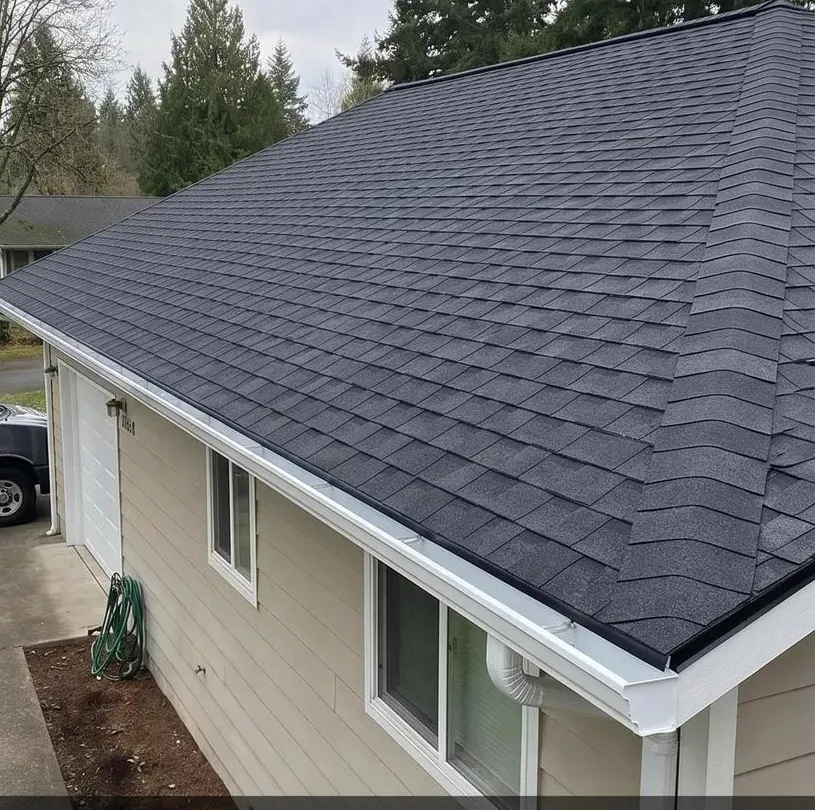
A roof is the most important shield your home has. It faces snow, ice, freezing rain, summer heat, wind and the occasional hail storm, year after year. In Central Pennsylvania, where winters are long and temperatures swing above and below freezing many times a season, roofs wear out faster than many homeowners expect. Replacing a roof is a big investment, so it helps to understand your options before you call a contractor.
This guide explains when to replace a roof, how much roof replacement costs in Central Pennsylvania, which materials make sense, what the process looks like and how to choose a roofer. It comes from Haven Builders, a locally owned construction and remodeling company that serves Williamsport, Lock Haven, State College and nearby towns.
Repair or Replace? How to Know
Not every roof problem calls for a full replacement. A few missing shingles after a windstorm, a damaged flashing or a small leak can often be repaired. Replacement is usually the better choice when damage is widespread, when the roof is near the end of its expected life or when repairs are becoming frequent and costly. As a rough rule, if more than about a third of the roof surface needs work, replacement often makes more financial sense than patching.
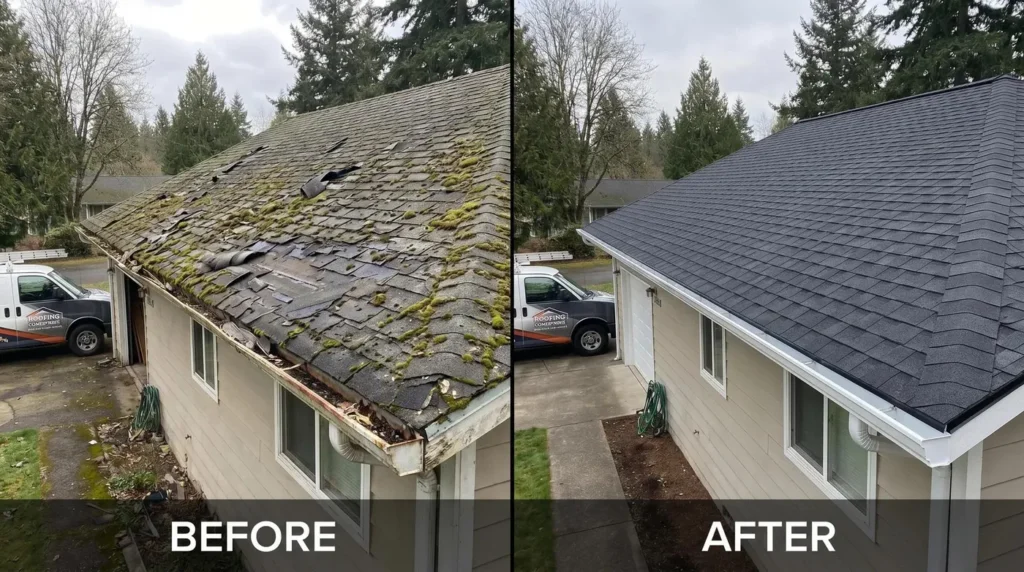
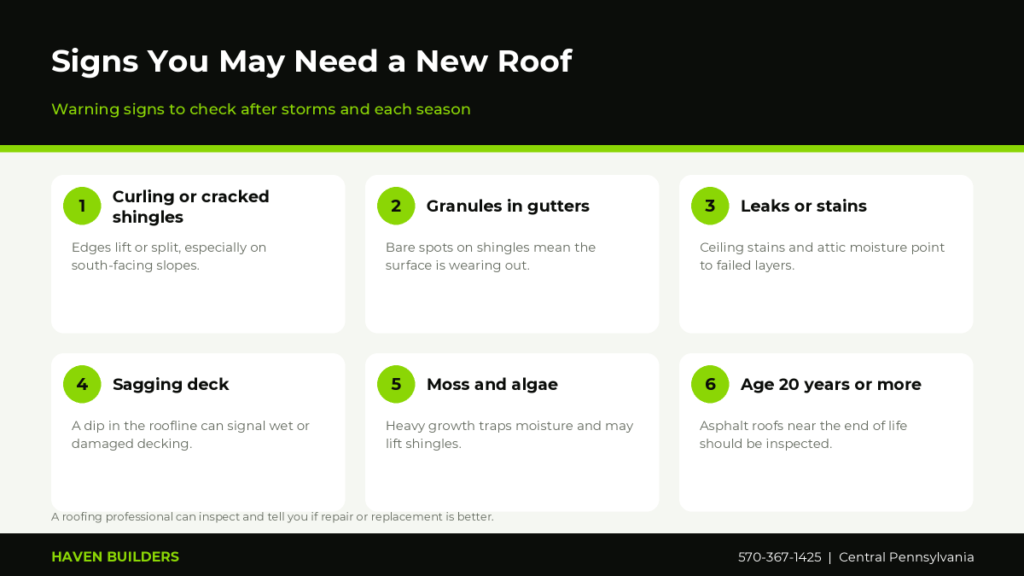
Warning Signs to Watch For
- Shingles that are curling, buckling, cracked or missing.
- Dark streaks, bare spots and granules collecting in gutters or downspouts.
- Water stains on ceilings or walls, or damp insulation in the attic.
- Daylight visible through roof boards from the attic.
- A sagging roofline or soft spots when the deck is inspected.
- Moss, algae or lichen growth that holds moisture.
- Ice dams that form every winter along the eaves.
Safety first: do not climb on a snowy, icy or steep roof to inspect it. Look from the ground with binoculars, check the attic with a flashlight and call a qualified roofer for a professional inspection.
Roofing Materials for Central Pennsylvania Homes
Asphalt Shingles
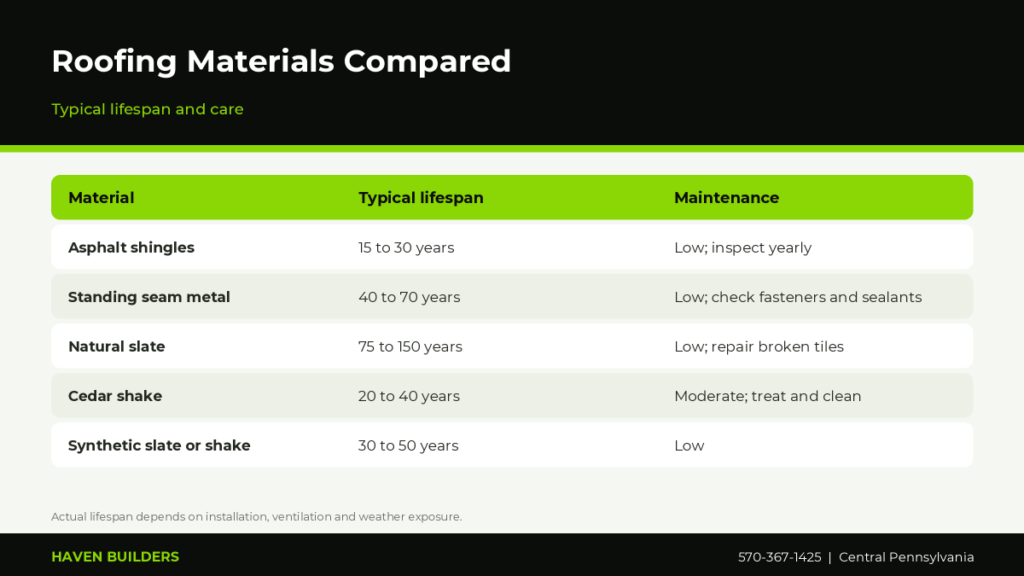
Asphalt shingles are the most common roofing in the United States, and for good reason. They are affordable, available in many colors and relatively easy to install and repair. Architectural, or laminated, shingles are thicker and more durable than basic three-tab shingles and are the standard choice for most re-roofs. With proper ventilation, they often last 20 to 30 years.
Metal Roofing
Standing seam and metal shingle roofs shed snow easily, resist fire and can last 40 years or more. They cost more up front, but they often reduce long-term maintenance. Snow guards are important in snowy regions to keep sliding snow from falling on people, entrances and walkways.
Slate and Cedar
Natural slate is one of the longest-lasting roofing materials available, but it is heavy, expensive and requires specialist installation. Cedar shakes offer a warm, traditional look but need regular maintenance. Both are less common but may be a good match for historic homes.
Synthetic Options
Composite and polymer products imitate slate or wood shakes while being lighter and less costly. They can be a smart choice when you love a traditional appearance but want lower weight and maintenance.
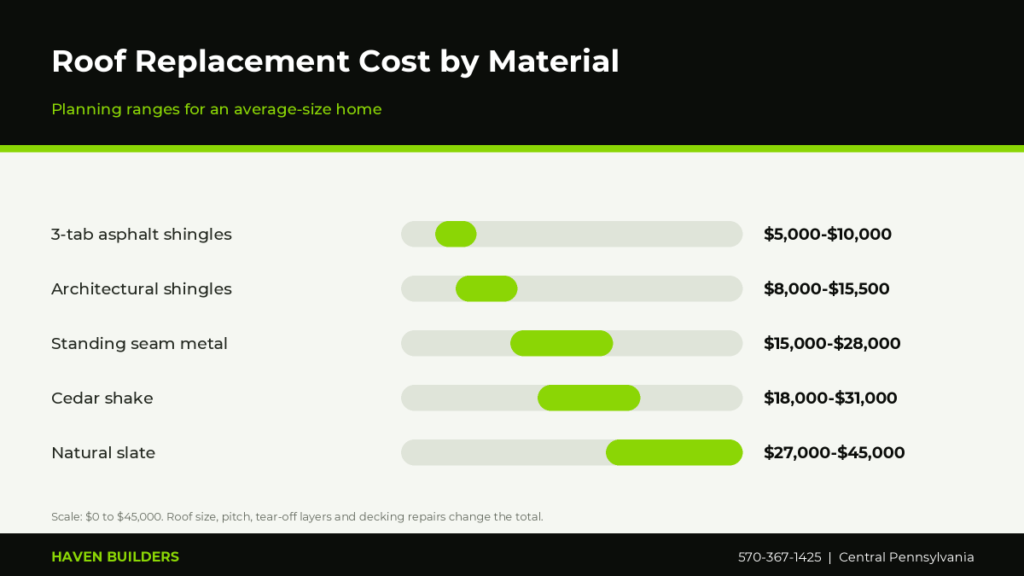
How Much Does a New Roof Cost in Central Pennsylvania?
Roof costs depend on size, pitch, complexity, materials, the number of layers to remove and the condition of the decking. A simple gable roof costs less per square than a roof with many dormers, valleys and skylights. A roofing square equals 100 square feet. The chart above shows planning ranges for an average home, but your quote may differ, so ask for a detailed written estimate. For related costs and planning, see our vinyl siding replacement guide, since many homeowners replace the roof and siding together to share scaffolding and cleanup.
What Else Affects the Price
- Tear-off. Removing one or more layers of old roofing adds labor and disposal fees.
- Decking repairs. Rotted or damaged plywood or boards must be replaced.
- Underlayment and ice barrier. Self-adhering membranes along eaves and valleys protect against ice dams.
- Flashing and vents. New flashing around chimneys, skylights, pipes and walls prevents leaks.
- Ventilation. Proper ridge and soffit ventilation extends roof life and reduces ice dams.
- Access and safety. Steep roofs and tall homes require extra safety equipment.
Roof Replacement Step by Step
A professional roof replacement follows a set process. First, the crew protects landscaping, gutters and the driveway. Old roofing is removed, and the deck is inspected and repaired. Next, an ice and water barrier is installed along eaves, valleys and other vulnerable areas, followed by synthetic underlayment over the rest of the deck. Drip edge, flashing and vents are installed. Shingles or other roofing are then fastened according to manufacturer specifications. Ridge vents and caps finish the roof. Finally, the crew cleans up the site and uses a magnet to find stray nails. Most asphalt roofs take one to three days, while metal and slate take longer. This video shows a roof going on from start to finish.
Video: Shingle Roof Replacement by Roof Solutions (Roof Solutions on YouTube)
Ventilation, Insulation and Ice Dam Prevention
A roof is a system, not just a covering. Shingles protect the top, but the attic below determines how long the roof lasts. In winter, heat escaping from the living space warms the roof deck, melts snow and sends water down to the cold eaves, where it refreezes into ice dams. In summer, trapped heat bakes shingles from below and shortens their life. The remedy is a balanced approach that includes air sealing around ceiling penetrations, attic insulation at recommended levels and continuous ventilation with intake at the soffits and exhaust at the ridge.
Many older Central Pennsylvania homes have blocked soffit vents, thin insulation or bath fans that exhaust into the attic instead of outdoors. A re-roof is the right time to correct these problems, because the roof deck is exposed and ventilation components can be added correctly. Skipping ventilation upgrades is one of the most common reasons a new roof fails early.
Gutters, Flashing and Drainage
New roofing works best with good drainage. Check that gutters are sized for the roof area, slope toward downspouts and discharge water away from the foundation. Replace old flashing around chimneys, walls, valleys and skylights rather than reusing it, since reused metal often leaks. Step flashing, counter-flashing and kick-out flashing at wall intersections are small details that prevent big water problems.
Central Pennsylvania Roofing Challenges
Weather and housing styles in this region create several specific concerns.
- Ice dams. Warm attic air melts snow, which refreezes at the eaves and backs water under shingles. Good insulation, air sealing and ventilation are the cure.
- Heavy snow loads. Roof framing must handle winter loads. See our house framing guide for background.
- Freeze-thaw cycles. Repeated cycles stress flashing, sealants and shingles.
- Wind and storms. Strong thunderstorms can lift shingles and damage flashing.
- Older homes. Some houses have multiple roof layers, skipped sheathing or unusual rooflines.
Storm Damage and Insurance Claims
Central Pennsylvania sees strong summer thunderstorms, occasional hail and heavy winter storms, and any of them can damage a roof. If you suspect storm damage, document it right away with dated photos, and make temporary repairs such as a tarp to prevent further water entry. Keep receipts for these steps, because many policies reimburse reasonable emergency costs. Then contact your insurer and ask how to file a claim and what documents are needed.
An adjuster will inspect the damage and determine what is covered, often with a deductible. A reputable roofer can provide a detailed estimate and attend the inspection, but you are free to choose your own contractor. Never sign over your insurance claim to a contractor you have just met, and be cautious about anyone who promises to waive your deductible, since that practice can be illegal.
Timing Your Roof Replacement
Roofing can be done in many seasons, but spring through fall is the most comfortable and common. Asphalt shingles seal best in mild temperatures, so very cold weather may require special care. Scheduling in late spring or summer gives you flexibility, though demand is high and contractors fill up. Do not wait until a leak damages your ceiling or insulation, because the cost of interior repairs can far exceed the savings from delay.
Permits, Insurance and Warranties
Roof replacement often requires a building permit, particularly if structural work is involved, and rules vary by municipality. See home remodeling permits in Pennsylvania for general guidance. If your roof was damaged by a storm, call your insurance company promptly, document the damage with photos and ask your contractor for a written estimate. Understand the difference between the manufacturer’s material warranty and the contractor’s workmanship warranty, and get both in writing.
Questions to Ask Before You Sign a Roofing Contract
A clear contract protects both sides. Make sure it lists the exact products, including shingle line and color, underlayment, ice barrier, drip edge, vents and flashing. It should state who pulls the permit, how decking repairs are priced if rot is found, what the payment schedule is and when the work will begin and end. Ask how the crew will protect your landscaping, siding and windows and where the dumpster will sit. Request proof of liability insurance and workers’ compensation, and confirm that the company will provide a workmanship warranty in writing.
It is also fair to ask who will supervise the job. A trustworthy roofer will give you a contact person and will tell you promptly if conditions change. Be wary of any contractor who pressures you to sign immediately, offers a deep discount for a decision today or asks for the full payment before work begins.
How to Choose a Roofing Contractor
- Verify Pennsylvania Attorney General contractor registration, insurance and workers’ compensation coverage.
- Ask for local references and photos of finished roofs.
- Compare written estimates line by line, including tear-off, underlayment, flashing and ventilation.
- Be careful with door-to-door storm chasers and unusually large upfront deposits.
- Ask who will be on site and who is responsible for cleanup.
Our contractor hiring guide offers more detail.
Caring for Your New Roof
Once your roof is installed, a little attention will help it reach its full lifespan. Inspect it from the ground twice a year, in spring and fall, and after major storms. Clean gutters regularly so that water does not back up under the edge of the roof. Trim overhanging branches that scrape shingles or drop debris. Do not pressure wash asphalt shingles, which can strip protective granules. If moss appears on shaded slopes, use a gentle treatment recommended by the manufacturer rather than harsh scrubbing.
Keep your paperwork in one place, including the contract, warranty documents, product labels and photos. If you sell your home, these records show buyers that the roof was properly installed and maintained. Some manufacturer warranties can be transferred to a new owner, which adds real value at resale.
Why Central PA Homeowners Choose Haven Builders
Roofing and exterior work are core services at Haven Builders. We are a locally owned company that treats every home as if it were our own, with honest estimates, dependable scheduling, attention to detail and quality workmanship. Browse finished projects on Our Work, learn more on the About page, then request a free estimate or call 570-367-1425.
Frequently Asked Questions
How much does a new roof cost in Central Pennsylvania?
Planning ranges run from roughly $5,000 to $10,000 for basic asphalt shingles to $27,000 to $45,000 for natural slate on an average home, with metal and architectural shingles in between. Roof size, pitch and repairs change the total.
How long does a roof replacement take?
Most asphalt shingle roofs take one to three days once materials arrive, while metal, slate and complex roofs can take a week or more.
How long do asphalt shingle roofs last?
Typically 15 to 30 years, depending on shingle quality, ventilation, installation and weather exposure.
Can I put a new roof over the old one?
Sometimes, but a full tear-off is usually better because it lets the roofer inspect and repair the deck and ensures proper flashing and underlayment. Local code may limit the number of layers.
What is the best roof for snow country?
Metal roofing sheds snow well, and quality architectural shingles perform well when installed with ice barrier and good ventilation. The best choice depends on your home and budget.
How do I prevent ice dams?
Improve attic insulation and air sealing, ventilate the roof properly and install an ice and water barrier along eaves during replacement.
Do I need a permit to replace my roof in Pennsylvania?
Often yes, but rules vary by municipality. Check with your local code office or ask your contractor.
Does Haven Builders replace roofs?
Yes. Haven Builders provides roofing and exterior work across Central Pennsylvania. Call 570-367-1425 for an estimate.
Ready to Start Your Project?
Haven Builders is a locally owned construction and remodeling company serving homeowners across Central Pennsylvania, including Williamsport, Lock Haven and State College. Tell us what you have in mind and we will give you a clear, honest estimate.
Want a website that brings in local leads? Abbabeelweb is a web design, WordPress development and SEO studio that builds fast, search-optimized websites and ranking-focused blog content for contractors, remodelers and other local service businesses, from custom Elementor design and on-page SEO to technical clean-up and content strategy. Visit abbabeelweb.com to see our services, or hire us on Fiverr to get started.