
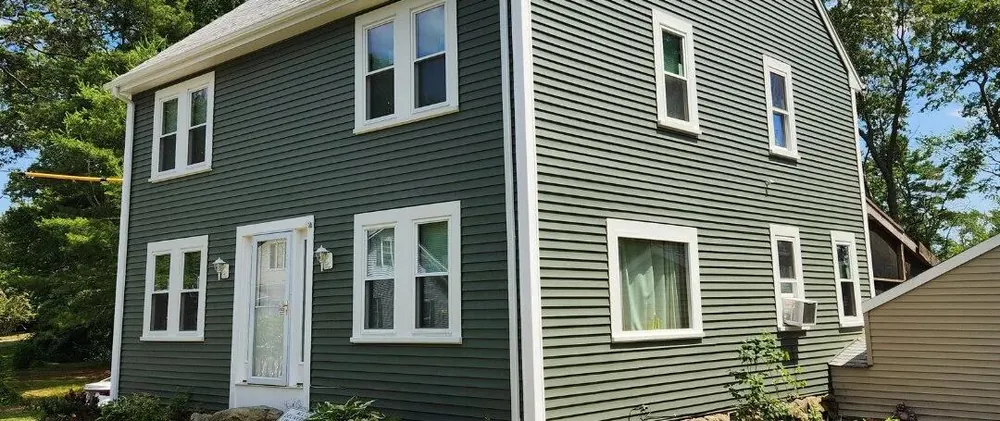
The siding on your home does much more than set its look. It is the outer skin that protects walls from rain, wind, snow, sun and insects. When siding is cracked, warped, faded or loose, water can slip behind it and cause rot, mold and insulation damage that you may not see until repairs are expensive. In Central Pennsylvania, where freeze-thaw cycles, wind-driven rain and humid summers are normal, siding has a hard job.
Vinyl siding is the most popular choice for homeowners because it is affordable and low maintenance. This guide explains when to replace vinyl siding, how much siding replacement costs, how it compares with other materials, how the installation works and how to choose a contractor. It comes from Haven Builders, a locally owned construction and remodeling company serving Williamsport, Lock Haven, State College and nearby communities.
Signs It Is Time to Replace Your Siding
Siding rarely fails all at once. It gives warnings first. If you notice any of the following, it is worth having a professional inspect it.
- Cracks, holes or loose panels. Damage allows water and insects behind the siding.
- Warping, buckling or bulging. These can signal trapped moisture or poor installation.
- Fading and chalking. Mild fading is cosmetic, but heavy chalking suggests the surface is breaking down.
- Rot, mold or mildew. Soft spots on trim or boards indicate moisture problems.
- High energy bills. Poor insulation and air leaks make heating and cooling more expensive.
- Peeling paint or blistering on wood or fiber cement.
- Bugs or pests entering through gaps.
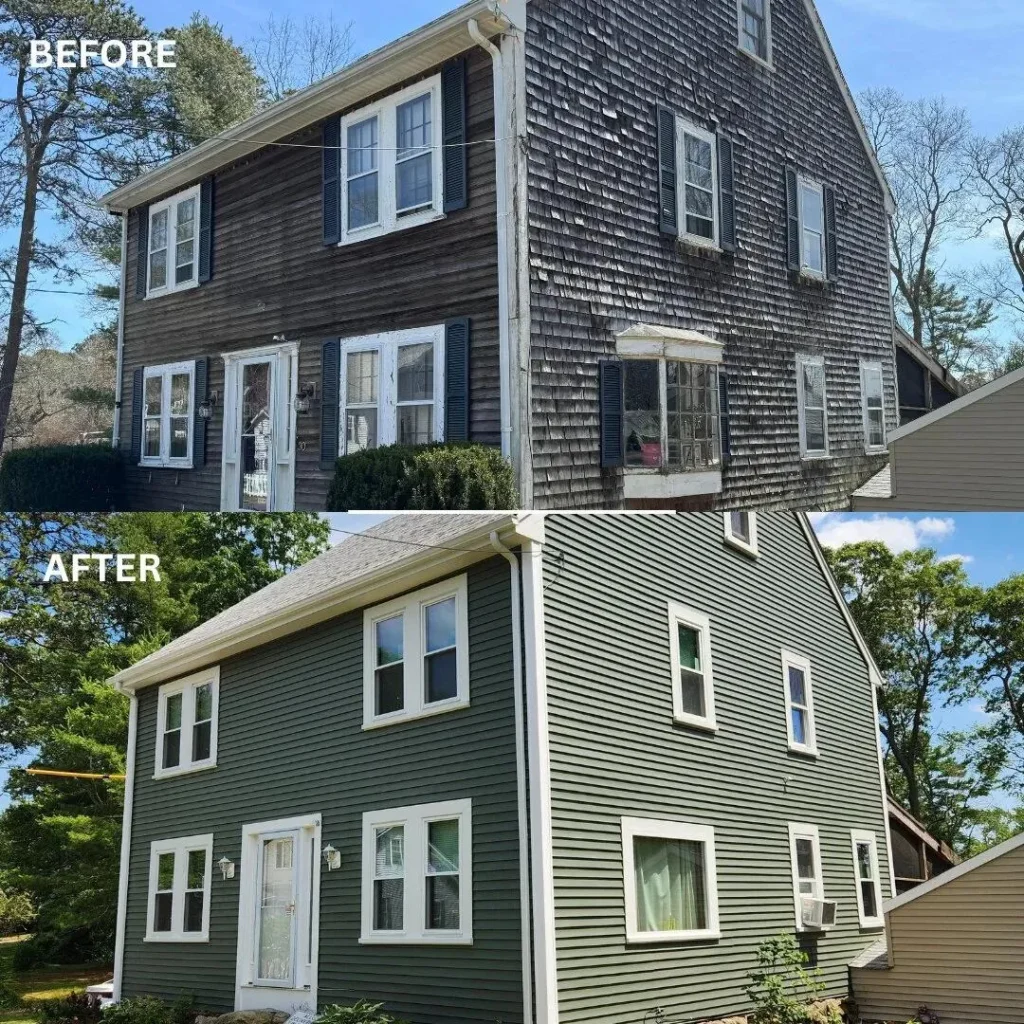
Sometimes a few panels can be repaired. Replacement is often wiser when damage is widespread, when matching old faded panels is impossible or when moisture damage extends behind the siding.
Why Vinyl Siding Is So Popular
Vinyl siding became a favorite for good reasons. It is affordable compared with most alternatives, it never needs paint, it resists rot and insects and it is available in many colors and profiles, from traditional lap to dutch lap, board-and-batten and shake styles. Modern products also include premium lines with thicker panels, better color retention and improved impact resistance.
Vinyl does have limits. It can crack in extreme cold if hit hard, warp under intense reflected heat from low-E windows and fade over time. It is also not as strong as fiber cement. Still, for most homeowners in Central Pennsylvania, quality vinyl offers excellent value.
Insulated Vinyl Siding
Insulated vinyl has a rigid foam backing attached to the panel. It makes the siding stiffer and straighter, reduces hollow sound and adds a modest improvement to energy performance. It costs more than standard vinyl and is worth considering if you want a smoother look and better thermal performance.
Siding Material Options Compared
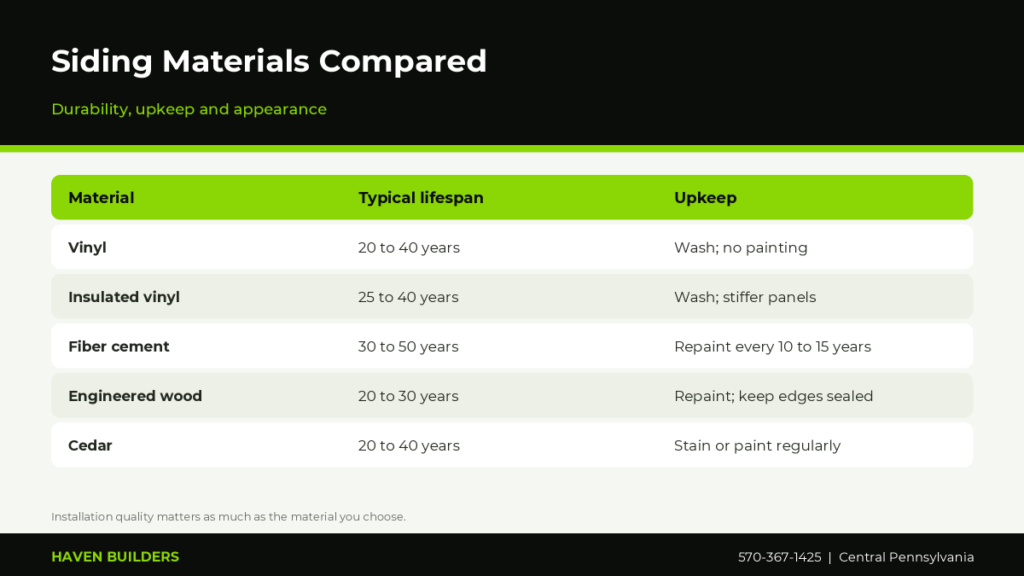
If you are weighing options, the table above sums up the main differences. In short, fiber cement is durable and handles weather well, but it is heavy, needs painting and costs more to install. Engineered wood offers a natural look with better durability than solid wood, but needs sealed edges. Cedar is beautiful but demands regular maintenance. For many homes, vinyl offers the best balance of cost and low upkeep.
Choosing Colors and Styles That Last
Siding color and profile shape your home’s curb appeal for decades, so it pays to choose carefully. Look at the roof, brick, stone, shutters and landscaping you plan to keep, and pick a color family that works with them. Medium and light neutral tones tend to hide dirt and resist visible fading, while very dark colors absorb more heat and can be more likely to warp on sunny walls. Many manufacturers now offer darker colors with heat-reflective technology, so ask about it if you love a deep tone.
Request large samples and view them outdoors in morning, afternoon and evening light, because small indoor chips can be misleading. Consider your neighborhood too. Some historic districts and homeowner associations set rules for materials and colors, and a quick call before you order can prevent costly surprises. Profiles such as traditional lap, dutch lap, beaded, board-and-batten and shake add character, and combining two profiles on gables or porches creates visual interest without much added cost.
How Much Does Siding Replacement Cost?
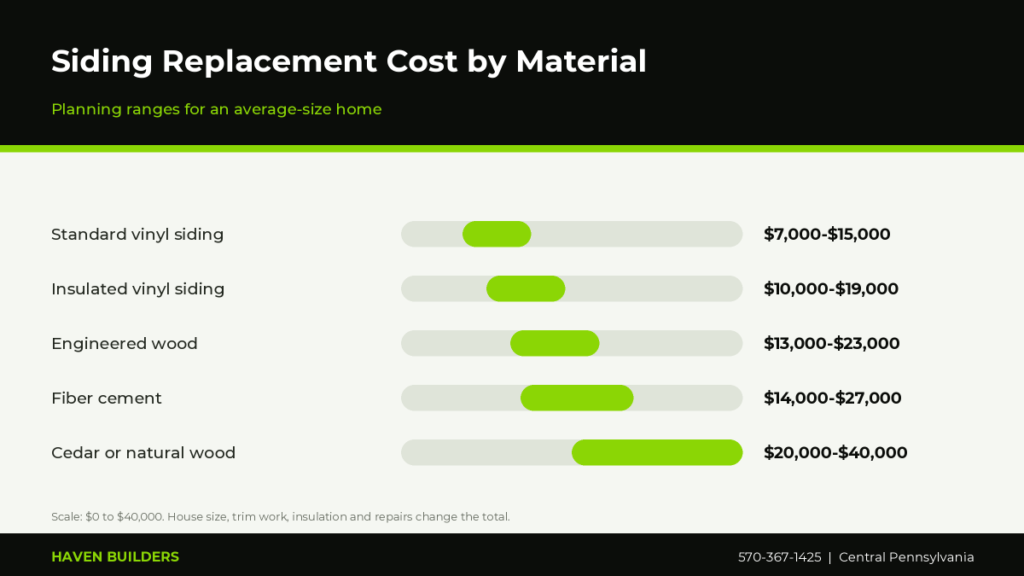
Siding cost depends on the material, the size and height of the house, the number of corners and windows, the condition of the sheathing, trim details and whether you add insulation. A simple ranch costs less than a tall house with many gables. The planning ranges above are not quotes, so ask for a written, itemized estimate. Many homeowners combine siding with a new roof or windows to share scaffolding and reduce disruption. See our roof replacement guide for more on coordinating exterior projects.
What Can Change the Price
- Removing old siding, especially multiple layers or materials that need special handling.
- Repairing rotted sheathing, framing or window openings.
- Upgrading to premium panels, decorative shakes or trim.
- Adding foam insulation or house wrap with enhanced air sealing.
- Replacing soffit, fascia, gutters and downspouts at the same time.
- Difficult access, steep slopes or tall walls.
The Siding Installation Process
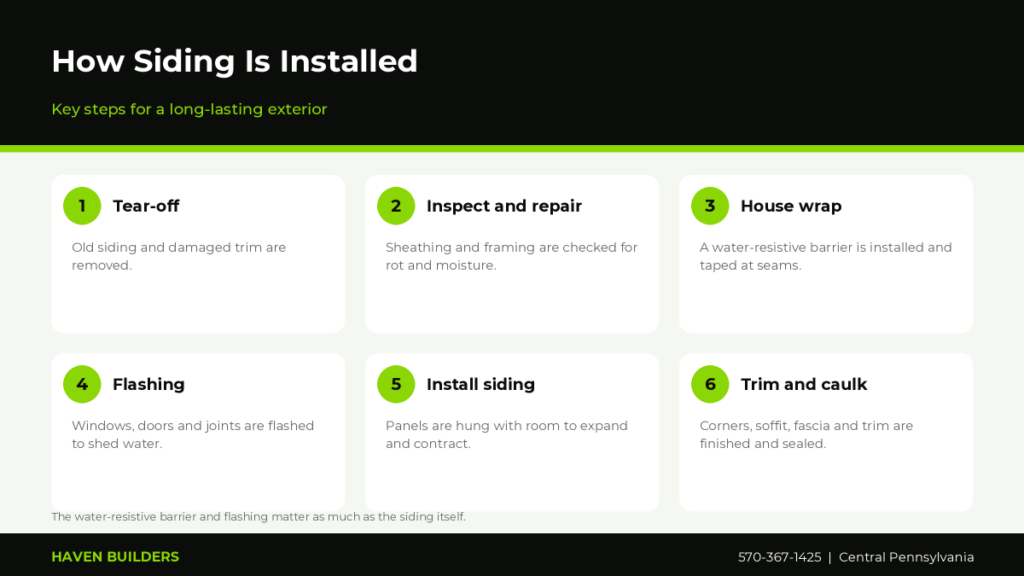
Good installation is what turns a nice product into a lasting wall system. After removing the old siding, the crew inspects the sheathing and repairs any damage. A water-resistive barrier, such as house wrap, is installed and taped at seams. Windows and doors are flashed so that water runs to the outside. Starter strips, corner posts and J-channels are installed, then panels are hung with nails placed in the center of the slots, not driven tight. Vinyl must be able to expand and contract with temperature changes, which is especially important in a region with big seasonal swings. Trim, soffit and fascia are finished last, and joints are sealed where needed. This video shows a siding installation in action.
Video: HOW TO INSTALL VINYL SIDING (Average Guy DIY on YouTube)
Moisture Control and Insulation
Siding replacement is a chance to improve how your walls handle moisture and energy. If your home has little or no sheathing insulation, ask about adding rigid foam under the siding, which reduces thermal bridging through studs. A continuous, well-lapped house wrap or similar water-resistive barrier is essential, and flashing tape around windows, doors and penetrations prevents leaks. Without these steps, even the best siding will leak. In older homes, keep an eye out for lead paint on original trim, and ask your contractor how it will be handled safely.
Energy Savings and Comfort Benefits
New siding by itself does not make a house airtight, but a well-planned project can improve comfort. When the old siding is off, your contractor can seal gaps around windows and doors, add a continuous air and water barrier and, if you choose, install a layer of rigid foam insulation. These steps reduce drafts, stabilize indoor temperatures and may lower heating costs during long Pennsylvania winters. Homeowners often notice fewer cold spots near exterior walls and a quieter house after the work.
Remember that insulation and air sealing work together. If your attic is under-insulated or your windows leak, siding alone will not solve the problem. A home energy audit before the project can show where air escapes and which improvements give the best return. Ask your contractor whether any utility rebates or tax incentives apply to insulation upgrades, and keep receipts for your records.
Windows, Doors and Trim: Do It at the Same Time?
Because siding is removed anyway, it is an ideal time to replace worn windows and doors, upgrade trim and improve flashing. Doing this work together can be more efficient than tackling projects separately, and it avoids damaging new siding later. If you plan an addition or other structural changes soon, coordinate them with siding so that you do not have to match old and new materials. Read about home additions in Central Pennsylvania for related planning.
Siding Problems Hidden Behind the Wall
The most important part of a siding project is often what no one sees. When old siding comes off, contractors regularly find water damage around windows, rotted sill plates, termite or carpenter ant activity, failed flashing and missing insulation. Older Central Pennsylvania homes may also have layers of wood clapboard under newer siding, or lead paint that must be handled with care. Finding these issues early lets the crew repair them properly before covering the wall.
This is why a flexible budget matters. Setting aside a modest allowance for sheathing and trim repairs prevents delays and disputes, and a contractor who explains how repair costs will be priced, per sheet or per hour, is easier to work with. Ask for photos of any damage that is found, so that you can see exactly what is being repaired and why it is necessary.
Permits, Warranties and Choosing a Contractor
Some municipalities require permits for siding replacement, and rules vary, so check with your local code office. Read the manufacturer’s warranty and the contractor’s workmanship warranty carefully, and make sure each one is in writing. Ask for proof of insurance, check Pennsylvania Attorney General contractor registration and request references from similar projects. Compare estimates item by item, including the type of house wrap, flashing, trim and cleanup. Our contractor hiring guide and permits guide can help.
Preparing for Installation Day
A little preparation makes siding installation smoother. Move patio furniture, grills, planters and decorations away from the walls. Trim bushes and tree limbs that touch the house so that the crew has room for ladders and scaffolding. Let neighbors know about the work, since noise and dumpsters may affect them, and keep pets inside. If you have window air conditioners or exterior outlets in use, ask the crew how they will manage them during the job.
Expect some noise from tear-off, nailing and saws, and some debris despite magnets and tarps. Reputable contractors clean up daily and do a final magnetic sweep for stray nails. At the end, walk around the house with the project manager to check corners, trim, caulking and cleanliness. Write down any small touch-ups before the final payment, and keep a copy of the warranty and product information with your home records.
Caring for Vinyl Siding
Vinyl siding needs little care, but a few habits extend its life. Wash it once or twice a year with a soft brush and mild soap, rinse from the top down and avoid high-pressure washing that can force water behind panels. Keep shrubs and tree limbs trimmed back, avoid grilling close to the wall because heat can melt or warp vinyl, and watch for loose panels after storms. Prompt repairs prevent small problems from becoming big ones.
Common Siding Mistakes to Avoid
- Nailing vinyl too tight, which causes buckling.
- Skipping flashing around windows and doors.
- Installing over damaged sheathing without repairs.
- Choosing the lowest bid without comparing materials and scope.
- Ignoring ventilation and insulation in the attic and walls.
- Not planning for trim, soffit and fascia as a package.
Why Central PA Homeowners Choose Haven Builders
Siding and exterior work are core services at Haven Builders. We are a locally owned company that treats every home as if it were our own, with honest estimates, dependable scheduling, attention to detail and quality workmanship. See finished projects on Our Work, learn more on the About page, then request a free estimate or call 570-367-1425.
Frequently Asked Questions
How much does it cost to replace vinyl siding?
Planning ranges run from about $7,000 to $15,000 for standard vinyl on an average home, with insulated vinyl at roughly $10,000 to $19,000. House size, repairs and trim work change the total.
How long does vinyl siding last?
Quality vinyl siding often lasts 20 to 40 years, depending on the product, installation and exposure to sun and weather.
Is insulated vinyl siding worth it?
It can be if you want straighter walls, a quieter exterior and a modest energy improvement. It costs more than standard vinyl.
When should I replace my siding instead of repairing it?
Replacement is usually wise when damage is widespread, panels are brittle or faded, moisture has reached the sheathing or matching replacement panels is not possible.
Can new siding go over old siding?
It is sometimes done, but removing old siding lets the contractor inspect and repair the wall, add house wrap and flash windows correctly. Most contractors recommend a full tear-off.
What is better, vinyl or fiber cement siding?
Vinyl costs less and needs less maintenance. Fiber cement is more durable and fire resistant but costs more and needs repainting.
How long does siding installation take?
Most homes take about one to two weeks, depending on size, weather and repairs.
Does Haven Builders install siding?
Yes. Haven Builders handles siding and exterior work across Central Pennsylvania. Call 570-367-1425 for an estimate.
Ready to Start Your Project?
Haven Builders is a locally owned construction and remodeling company serving homeowners across Central Pennsylvania, including Williamsport, Lock Haven and State College. Tell us what you have in mind and we will give you a clear, honest estimate.
Want a website that brings in local leads? Abbabeelweb is a web design, WordPress development and SEO studio that builds fast, search-optimized websites and ranking-focused blog content for contractors, remodelers and other local service businesses, from custom Elementor design and on-page SEO to technical clean-up and content strategy. Visit abbabeelweb.com to see our services, or hire us on Fiverr to get started.