
Plumbing is the part of a kitchen or bathroom remodel that most homeowners worry about, and for good reason. A leak inside a wall can cause rot, mold and expensive damage. A poorly planned drain can lead to slow sinks and bad smells. On the other hand, a well-planned plumbing system is invisible: water pressure feels strong, fixtures work quietly and nothing ever drips.
This guide explains how plumbing fits into a bathroom or kitchen remodel in Central Pennsylvania, including the types of pipes you may find, what it costs to move fixtures, what permits and inspections to expect, and how to avoid common problems. It comes from Haven Builders, a locally owned construction and remodeling company serving Williamsport, Lock Haven and State College. This article is general information and does not replace advice from a licensed plumber or your local code office.
Why Plumbing Planning Comes First
Plumbing decisions affect the rest of the project. The location of a toilet, shower or sink decides where walls, cabinets, tile and framing go. Moving a fixture a few feet may require changes to the floor framing, which can lead to extra cost. For this reason, good contractors settle the plumbing layout early, before ordering cabinets or tile.
The simplest and least expensive remodels keep fixtures in their current locations. If your layout works, staying put can save money for finishes you will enjoy every day. If your layout does not work, such as a cramped bathroom or a kitchen sink far from the dishwasher, moving plumbing may be worth the investment.
Supply, Drain and Vent: The Three Systems
Residential plumbing has three main systems that work together.
- Supply lines. These bring hot and cold water under pressure to fixtures and appliances.
- Drain lines. They carry wastewater away using gravity, so slope matters.
- Vent lines. They allow air into the system so that water drains freely and sewer gases stay out of the home.
A plumber must plan all three. A fixture that is moved too far from a vent, or a drain that does not have proper slope, can cause gurgling, slow drainage and odors.
Water Heaters and Hot Water Demand
A remodel often changes how much hot water your household needs. A new soaking tub, a rainfall shower head or a second bathroom can overwhelm an older, undersized tank. Before you finalize fixtures, ask your plumber to compare your current heater’s capacity with the new demand. Options include a larger tank, a tankless gas or electric unit that heats water on demand and a heat pump water heater that uses less electricity but needs space and airflow. Each has tradeoffs in cost, installation, efficiency and maintenance.
If you choose a tankless unit, expect that gas line size, venting and electrical capacity may need upgrades. Hard water, which is common in some parts of Central Pennsylvania, can build scale in heaters and fixtures, so a water softener or periodic flushing may be worthwhile. A plumber can test your water and recommend practical steps.
Pipes You Might Find in an Older Central PA Home
Houses in this region span more than a century of building practices, so the pipes behind your walls could be almost anything.
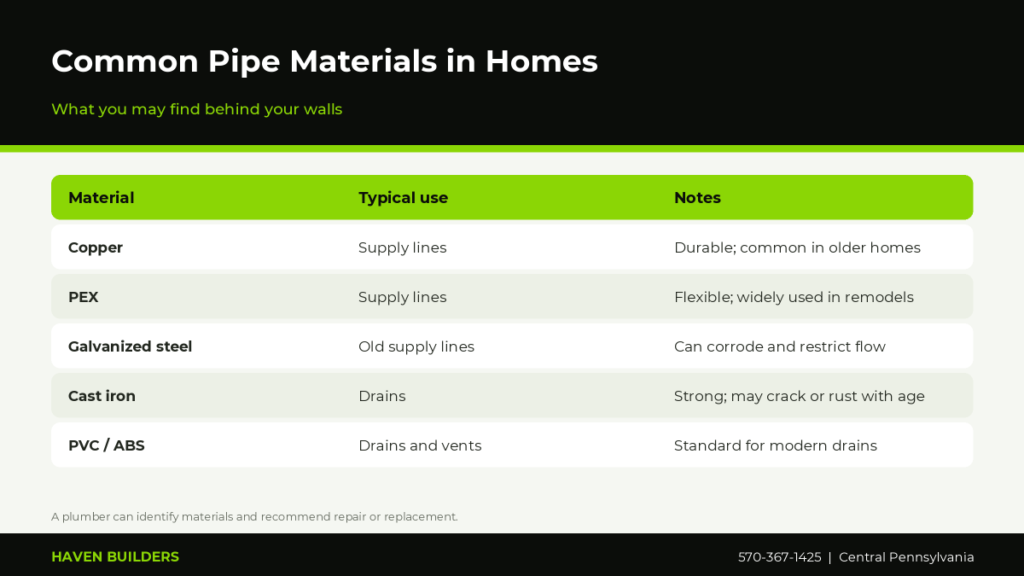
Galvanized Steel
Common in homes built before the 1960s, galvanized supply pipes corrode from the inside and can restrict water flow. If your faucets have weak pressure or rust-colored water, replacement may be a good idea during a remodel.
Cast Iron Drains
Cast iron is strong and quiet, but it can rust, crack or clog with scale. A camera inspection helps determine whether drain lines should be replaced.
Lead Pipes and Solder
Very old homes may have lead service lines or lead solder in copper plumbing. If you suspect lead, have your water tested and ask your plumber about replacement options. This is a health matter, not simply a repair.
Copper and PEX
Copper is durable and widely used. PEX tubing is flexible, resists freezing damage better than rigid pipe and is popular for remodels because it is easy to route. Both are acceptable when installed properly under code.
Common Plumbing Upgrades During Remodels
- New shutoff valves. Old valves can stick or leak, so replacing them is inexpensive insurance.
- Pressure-balancing or thermostatic shower valves. They prevent sudden temperature changes.
- Larger drain lines. Upgrading drains can help with a new soaking tub or kitchen sink and disposal.
- Water heater replacement. A remodel is an opportunity to upgrade to a more efficient tank, a tankless unit or a heat pump water heater.
- Water filtration. A whole-house sediment filter or under-sink system can improve taste and protect fixtures.
- Dedicated appliance lines. Refrigerator ice makers and pot fillers need supply lines planned in advance.
Kitchen Plumbing Considerations
In kitchens, plumbing needs usually include a sink, dishwasher, disposal and perhaps a pot filler or refrigerator water line. If you move the sink to an island, the drain and vent must be carefully designed, often using an island loop vent to keep the system working properly. Gas lines for ranges and cooktops also need proper planning, as do range hoods that vent outdoors. Learn how these steps fit into the schedule in how long a kitchen remodel takes, and see our cabinet and countertop guide for choices that affect sink cabinet design.
Bathroom Plumbing Considerations
Bathrooms involve toilets, sinks, showers and tubs, and each has specific clearances. Toilets need a code-minimum space around them, and shower valves need access for service. When converting a tub into a shower, the drain location often changes, as explained in our tub-to-shower conversion guide. Heated floors, bidets and freestanding tubs add more connections. Waterproofing around plumbing penetrations is critical to prevent leaks inside walls. See small bathroom remodel ideas for layout tips that can reduce plumbing changes.
Fixture Choices That Affect Plumbing
The fixtures you pick influence the plumbing behind them. Wall-mounted faucets need rough-in valves set at exact heights. Freestanding tubs require floor-mounted or deck-mounted supply lines and a drain that lines up precisely. Wall-hung toilets need in-wall carriers with reinforced framing, and undermount sinks need cabinet cutouts that match drain locations. Always give your contractor the exact model numbers before rough-in so the plumber can follow the manufacturer’s specifications instead of guessing.
Water-saving fixtures are another consideration. WaterSense-labeled toilets, faucets and shower heads can reduce water use without hurting performance, which lowers utility bills and reduces strain on private septic systems that are common in rural parts of Central Pennsylvania.
How Much Does Remodel Plumbing Cost?
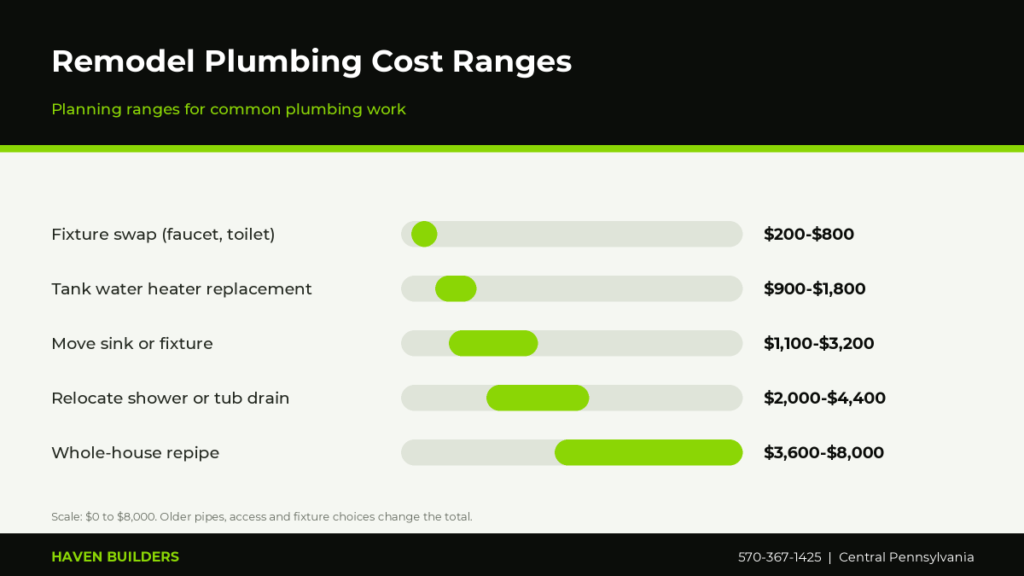
Costs depend on the amount of work, access, the age of the home and fixture choices. The chart above shows typical planning ranges. Replacing a faucet or toilet is inexpensive, while moving drains or repiping a house is a larger investment. A good plumber should provide an itemized, written quote. Be wary of very low bids that leave out rough-in, permits, venting or fixtures, since gaps often become change orders later.
Permits, Inspections and Codes
In Pennsylvania, plumbing work is generally covered by the Uniform Construction Code and, in many areas, the International Plumbing Code as adopted locally. Many municipalities require permits for new plumbing, moving fixtures or replacing water heaters, along with inspections at rough-in and final. Some places require plumbers to hold a local license. Check with your code office, and read about the broader process in home remodeling permits in Pennsylvania. The video below provides a helpful visual overview of remodel plumbing.
Video: Roughing Plumbing for a New Bathroom | This Old House (This Old House on YouTube)
Test, Inspect, Then Close the Walls
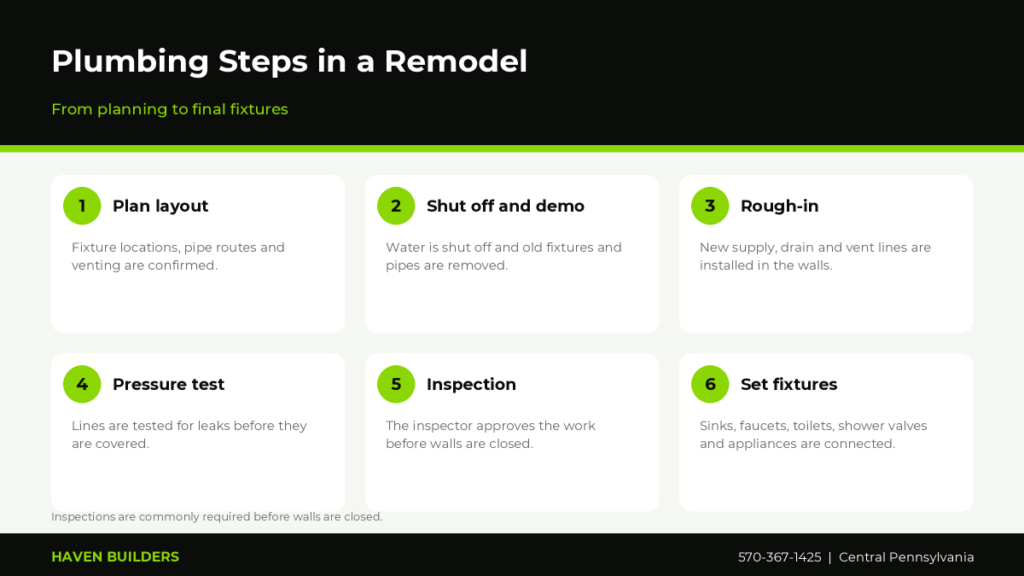
One of the best protections against plumbing problems is simple patience before closing walls. A pressure test on supply lines and a water test on drains can reveal leaks while they are still easy to fix. After the inspection passes, take photos of every wall showing where pipes, valves and shutoffs are located. Those photos become a permanent map of your home. Ask your plumber to label shutoff valves clearly, and confirm that access panels are installed where valves or cleanouts need servicing. A few extra hours here can save you from tearing out finished tile years later.
Protecting Your Home From Winter Plumbing Problems
Central Pennsylvania winters are hard on pipes. During a remodel, ask your contractor to keep supply lines in warm, insulated spaces and away from exterior walls where possible. If lines must run through exterior walls, insulation placed on the cold side can lead to freezing. Insulate pipes in crawl spaces and attics, seal gaps that let cold air into wall cavities and install frost-proof hose bibs outside. Know where your main shutoff is, and teach family members how to use it before an emergency happens.
Septic Systems, Well Water and Rural Properties
Many homes outside Williamsport, Lock Haven and State College rely on private wells and on-lot septic systems instead of public water and sewer. That changes remodel planning in several ways. A well pump and pressure tank must supply enough flow for added fixtures, and water quality may call for filtration or treatment. A septic system has a limited capacity, so adding bedrooms or bathrooms can trigger permit reviews by the local sewage enforcement officer. In some townships, an addition that increases the number of bedrooms requires proof that the septic system can handle the extra load.
Before you finalize a bathroom or kitchen plan on a rural property, ask your contractor to check the age and condition of the septic tank, the location of the drain field and the capacity of the well. Avoid pouring grease down the drain, install a screen on the disposal line if needed, and consider water-efficient fixtures that reduce the load on the system. These simple steps help protect your investment and the environment.
Questions to Ask Your Plumber
- Which pipe materials will you use, and why?
- Will any of my existing lines need to be replaced?
- How will the new fixtures affect water pressure and hot water supply?
- Who pulls the permit and schedules inspections?
- What warranty comes with the labor and the fixtures?
Avoiding Common Plumbing Mistakes in Remodels
- Ordering fixtures before the layout is final.
- Skipping a pressure test before closing walls.
- Using mismatched pipe materials without proper transition fittings.
- Failing to provide access panels for shower valves and traps.
- Ignoring venting rules to save money.
- Not shutting off water properly during demolition.
- Hiring unlicensed help in places where licenses are required.
Use our hiring checklist to vet contractors and subcontractors before work begins.
Why Central PA Homeowners Choose Haven Builders
Haven Builders coordinates plumbing, electrical, framing and finish work so that your remodel is organized from start to finish. We are locally owned, treat every home as if it were our own and stand behind honest estimates, dependable scheduling and quality workmanship. See finished projects on Our Work, learn more on the About page, then request a free estimate or call 570-367-1425.
Frequently Asked Questions
How much does it cost to move plumbing in a bathroom remodel?
Moving a sink or fixture typically runs about $1,100 to $3,200, while relocating a shower or tub drain can be $2,000 to $4,400 or more, depending on floor framing and access.
Do I need a permit to move plumbing in Pennsylvania?
In most municipalities yes, for new or relocated plumbing and water heaters. Requirements vary, so check with your local code office or have your contractor handle permits.
Should I replace old galvanized pipes during a remodel?
Often yes. Galvanized pipes corrode from the inside and restrict flow, and a remodel opens walls for easier replacement. A plumber can inspect and advise.
Is PEX better than copper?
Neither is always better. PEX is flexible, faster to install and handles freezing better, while copper is durable and long established. Both are acceptable when installed properly.
Can I move my kitchen sink to an island?
Yes, but the drain and vent must be designed correctly, often with an island loop vent. It adds cost and requires careful planning.
How long does plumbing rough-in take in a remodel?
Rough-in typically takes about three to seven days in a kitchen or bathroom, followed by testing and inspection before walls are closed.
How do I protect pipes from freezing in Central PA?
Keep pipes in insulated, heated spaces, seal air leaks, insulate exposed lines and use frost-proof outdoor faucets. Know where your main shutoff is.
Does Haven Builders handle plumbing in remodels?
Yes. Haven Builders coordinates plumbing as part of kitchen, bathroom and whole-home projects across Central Pennsylvania. Call 570-367-1425 for an estimate.
Ready to Start Your Project?
Haven Builders is a locally owned construction and remodeling company serving homeowners across Central Pennsylvania, including Williamsport, Lock Haven and State College. Tell us what you have in mind and we will give you a clear, honest estimate.
Want a website that brings in local leads? Abbabeelweb is a web design, WordPress development and SEO studio that builds fast, search-optimized websites and ranking-focused blog content for contractors, remodelers and other local service businesses, from custom Elementor design and on-page SEO to technical clean-up and content strategy. Visit abbabeelweb.com to see our services, or hire us on Fiverr to get started.